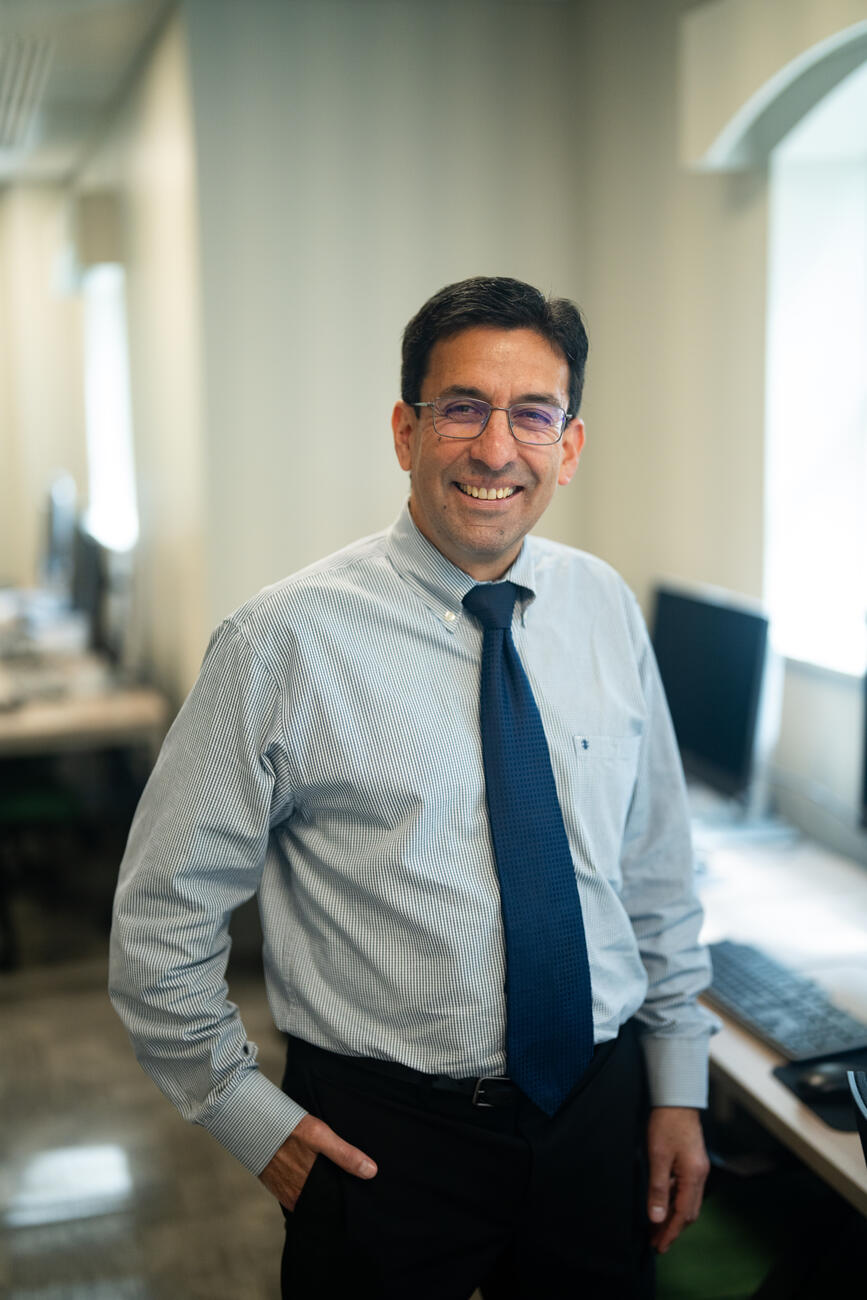
A computer scientist with a keen interest and expertise in cybersecurity.
Mark Thompson first discovered his passion for computer science in a programming class during his junior year of high school. Since then, he’s gained over three decades of experience in industry and academia. He’s adapted to advances in technology, maintaining relevant expertise through rapid changes in the field. He holds a B.S.E. in Computer Engineering from Tulane University, an M.B.A. in Business Administration and an M.S. in Mathematical Sciences from The University of Texas at Dallas, and a Ph.D. in Computational Analysis and Modeling from Louisiana Tech University.
What are you looking forward to about teaching Fundamentals of Programming this fall?
Teaching a new class always brings about satisfaction for me in imparting my knowledge and expertise to new students, but since I also love learning, I try to add some component — whether it be a project, technique, or tool — that I would like to learn more about to every course. And since the field of computer science is constantly changing, this is easy to do!
You have a research interest in cybersecurity and completed a dissertation on predicting threats using cyber sensors. What fascinates you about the subject?
All of cybersecurity fascinates me, since it impacts every area we work with, but especially since new tactics, techniques, and procedures are constantly being developed not only to exploit vulnerabilities (i.e., offense, red teaming), but also to protect systems (i.e., defense, blue teaming), and everything in between. While protecting a system means defending the entire attack surface, an attacker only needs to find one vulnerability to exploit it.
How do you think the study of Computer Science fits within the liberal arts?
Since technology is now part of virtually every traditional liberal arts discipline, Computer Science fits very well by teaching students how to think critically about the technology landscape they will inherit and shape in the future. Computer Science contributes to this mission by helping students develop skills for critical thinking, communication, ethical reasoning, creativity, quantitative reasoning, and understanding of human culture.