Skip to main
MEC Forest Bank

McDaniel Environmental Center

The McDaniel Environmental Center (MEC), located in Carroll County, Maryland, is a student-powered hub for collaborative and experiential learning opportunities, particularly in environmental studies, agriculture, and undergraduate research related to the natural world.

Environmental Management students at MEC

With you and the Hill, our world can become: Greener | More sustainable | A better place for all

The McDaniel Environmental Center supports the college’s mission and has become a student-powered hub for collaborative and experiential learning opportunities. Since McDaniel College acquired the property in the late 1980s, it has transformed into a creative space for our Environmental Studies students to make an impact from removing invasive species and planting native species to growing food that goes straight to those in need. 

In addition to Environmental Studies students, hundreds of McDaniel students have gained firsthand experience at the center through Biology, Ecology, Environmental Management, and Sustainable Agriculture courses over the last four years. 

The McDaniel Environmental Center Property

By the Numbers:

8

Acres of Student Farming Land

30

Acres of forested land

20

Acres of fields

3

Historic Residences

15

Bodies of Water

Four students pose with professor Elly Engle in front of a vegetable garden at the McDaniel Environmental Center.

Undergraduate Research Preparations begin for new Jam Garden at McDaniel Environmental Center Cultivating Academics

Three student researchers are making their mark at McDaniel with the Jam Garden, a new edible plant garden and outdoor learning space proposed by Assistant Professor of Environmental Studies Elly Engle and funded by the 2023 Ira G. Zepp Teaching Enhancement Grant.

The center provides countless opportunities:

Class research

Grow a garden into appetizing and healthy food through our Sustainable Agriculture course or conduct sight evaluations on the farm during an Environmental Management course.

Lab-based experiential learning
Students gain experience in the field while working to eradicate invasive species on the property, such as the Tree of Heaven, a southeast Asian native plant. Additionally, students have planted over 1000 native trees and bushes on the property over the past two years. 
Independent study work

Investigate a wide variety of impacts through senior capstones that incorporate individual research with the guidance of full-time faculty.


“The value of the property is that it provides students with the opportunity to apply their classroom learning in the great outdoors.”

Jason Scullion, associate professor and department chair of Environmental Studies.
Three students pose with Holly Martinson in a field.

Meaningful Scholarship Biology students contribute to international database Student-Faculty Collaborative Summer Research Program

In down-to-earth summer research, four senior Biology majors studied plant-pollinator interactions at the McDaniel Environmental Center with Assistant Professor Holly Martinson. They shared data from their rain-or-shine field work with the international Nutrient Network project while learning the skills that all ecologists need to know.

Liberal Arts at the MEC

McDaniel College is a diverse, student-centered community committed to excellence in the liberal arts and sciences and professional studies, and that extends to our Environmental Center!

The MEC is a place of learning for McDaniel and the Westminster community, and hosts a variety of classes and initiatives in all subject areas.

In fall 2023, English Professor Robert Kachur and 19 students in the class Nature Poetry met weekly at the MEC to experientially engage poetry and nature. With celebrated poets serving as nature guides, they paid attention to the intellectual, physical, emotional, and psychological aspects of transformative learning through a range of embodied outdoor activities: breathing-focused meditation, solitary wandering, physical labor, ritual, and intentional imagining and remembering. Pictured: Kachur and two students present on the Nature Poetry course at the third annual Academic Symposium.

A professor stands at a podium in a classroom with two students seated at a table next to him. A screen behind him reads "Embodied Learning."

Agrifood Program

McDaniel students with a passion for gardening and agriculture can become Agrifood Program fellows.

These dedicated fellows get hands-on at the MEC and the on-campus gardens to plant seeds, harvest produce, and maintain the gardens across seasons.

Students engage with the principles and practices of regenerative and perennial agriculture through the MEC’s 1.5-acre forest garden, 6-acre diversified cropping system, and the 2-acre wild foods trail.

These MEC features are being developed through student-led projects and community collaborations. 

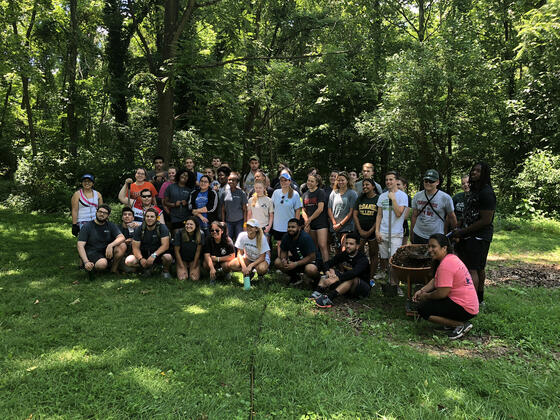
McDaniel Local Group Photo_Summer 2018

Community Service

Many student groups across campus have the opportunity to utilize the property. From 2015 - 2020, approximately 125 students have given back by engaging in service at the property, including Women's Soccer and the APO service fraternity / GreenLife.

Additionally, For the past two years, more than 500 McDaniel freshmen have visited the property and bonded through service activities during McDaniel Local

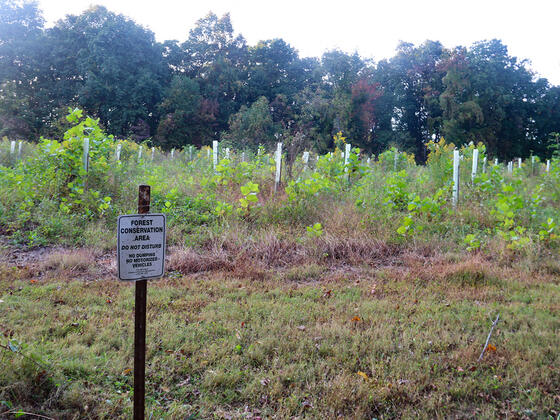
forest conservation area

Preservation

The college has increased teaching and research opportunities through $25,000 in grant funding from the Alliance for the Chesapeake Bay to establish a forest mitigation bank on the property. McDaniel reforested five acres of the farm as part of the Alliance’s “Forest for the Bay” program.

  • Improving wildlife habitat
  • Expanding student learning opportunities
  • Generating revenue for the college
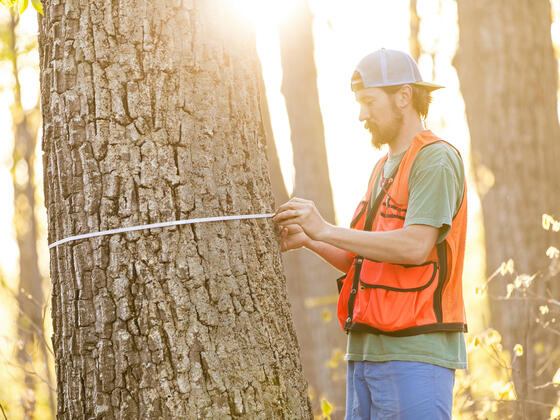
Student measuring tree at Singleton Matthews Farm.

Research

Students are making a difference through research at the McDaniel Environmental Center:

  • Studying wind power and the potential return on investment with installation of a wind turbine on the property.
  • Evaluating the farm’s soil health with an ultimate goal of improving the quality for future agricultural activities.
  • Examining forest carbon and looking at the property’s contribution to climate change through carbon sequestration.

Explore Undergraduate Research opportunities.

History

The McDaniel Environmental Center, formerly known as the Singleton-Mathews Farm, was established as a hunting lodge. When Dr. Charles Singleton, a famous scholar of Dante, took over ownership of the property in the 1950s, he had big dreams. He sought for the property to become a retreat for art, conservation and agriculture.

College President Robert H. Chambers visited Singleton and his sister-in-law Marthiel Mathews at the farm, where they shared a mutual passion for liberal arts and the preservation of the unique farmland in the center of Carroll County.

The farm, located off Stone Chapel Road in Westminster, Md., was acquired by McDaniel College in the late 1980s. Approximately half of the land was gifted to the college in 1987, and the rest was purchased from Johns Hopkins University in 1988. After the sale of seven one-acre lots on the periphery of the property, the college recouped more than it paid for the property.