Skip to main
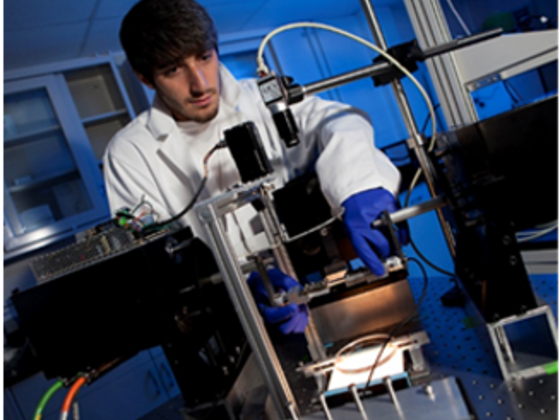
A student conducting a physics experiment with lasers

Engineering Mechanics

At McDaniel, Engineering Mechanics is accessible to all. We focus on you and where you want your knowledge to take you — not where typical, rigid STEM structures say you should go. Got a mind for both gears and gardening? We’ve got you.

Mortarboard
Degree Types
Major, Minor
Institution
Complementary Programs
Document
Special Opportunity
Transfer agreement with Carroll Community College

Engineering Mechanics is about more than just science. It’s about learning how the world works and solving real-world problems. At McDaniel, you get both classroom learning and practical experience. You don’t just learn about mechanics and materials — you understand how to use them to improve the world around you. You get to know the history, ethics, and social impact surrounding the science. McDaniel Engineering Mechanics gives you a solid foundation in topics like:

  • Thermodynamics
  • Robotics
  • Behavior prediction
  • Complex problem-solving
  • What it means to be human

We value collaboration over competition.

Typical engineering programs can feel rigid, competitive, and hard to break into. But at McDaniel, Engineering Mechanics is accessible to all. No matter your background or interest, you can have a place at the engineering table. You’ll have the flexibility to explore other topics, from History to Environmental Studies and more. Our faculty will work with you, offering guidance based on your specific needs. Together, we turn obstacles into learning opportunities.

You'll qualify for a number of careers.

Engineering employers are looking for a wide range of knowledge and skills. By combining our Engineering coursework with the liberal arts, we make sure you graduate with the tools you need to meet that demand. Your skills will be transferable, so you’ll have your pick of career options. Potential career paths include:

  • Mechanical design or engineering
  • Aerospace systems
  • Manufacturing
  • Robotics
  • Research
  • Software development
  • Technical consulting
moneycrosshairCreated with Sketch.
$102,320

Average wage for mechanical engineers

18,100

Projected annual job openings nationwide from 2024-34

5,600

Mechanical engineers employed in Maryland as of May 2023

We're a short drive from engineering employers.

Our location is central to some of the biggest job sources for engineering mechanics. Maryland is home to the third highest number of aerospace engineers in the country, with more than double the national average. Dreaming of working for a manufacturing or tech firm? A lot of them are located in the Baltimore-Washington area, just a short drive from campus.

We’re also within driving distance of:

  • Federal agencies, national laboratories, and consulting firms in Washington, D.C.
  • Johns Hopkins University Applied Physics Lab
  • NASA Goddard Space Flight Center
  • Naval Surface Warfare Center
  • Aerospace and defense contractors like Northrop Grumman, Lockheed Martin, and General Dynamics

Distinctive courses

Engineering Mechanics majors want to know how the world works. To do that, you might want to dive deep into engineering or explore other areas. Our curriculum gives you the flexibility to learn exactly how you want to — by becoming a double major, adding a minor, or studying across topics. Our core Engineering Mechanics courses include:

ENR 3105 – Computational Mechanics

This course introduces computational methods for modeling and analyzing mechanical systems. Students learn how the governing equations of solid mechanics, dynamics, and fluid mechanics can be solved using numerical techniques such as finite difference and finite element methods. Emphasis is placed on building physical intuition through computational analysis understanding how algorithms, approximations, and numerical errors influence mechanical behavior. Students use modern software tools to simulate real-world engineering problems and develop the ability to translate physical principles into predictive, quantitative models.

ENR 3311 – Mechanics of Solids

This course introduces students to the fundamental principles of continuum mechanics with applications in a variety of fields. Topics covered include: Static equilibrium and elastic stability, two and three-dimensional theories of stressed elastic solids, states of stress (shear, bending, torsion), vibrations, force resultants, analysis of determinate planar structures, displacements and deformations, and failure of materials under various loading conditions.

ENR 3312 – Fluid Mechanics

Fluids mechanics is the study of how liquids and gases behave in static and dynamic situations, and this course will help students better understand engineering problems and natural phenomena associated with fluid mechanics such as airplane wing design, fountains, and pumps. Beginning with static fluid phenomena, students will learn about fluid density, buoyancy, and pressure. Building on those principles, students will gain an understanding of the fundamentals of fluid dynamics, including: conservation laws for mass, energy, and momentum; generalized equations of motion and the Navier-Stokes equation; inviscid, constrained, and external flow; and forces associated with fluid motion.

PHY 3311 – Thermodynamics

Understanding thermodynamics means understanding how energy is allocated in systems from the very simple to the complex. This course covers the laws of thermodynamics, equations of state, thermodynamic potentials, and classical and quantum statistics of gases. At all points of this course, we will consider the connections between theory and application. Specific topics include ideal gases; chemical systems and equilibrium; energy, work, engines and entropy; spin and magnetic systems; and phase transitions.

The McDaniel Commitment in Action

The McDaniel Commitment — a series of opportunities guaranteed to all students — provides enhanced mentoring and coaching, and ensures every undergraduate student completes at least two meaningful experiential learning opportunities.

Special Opportunities

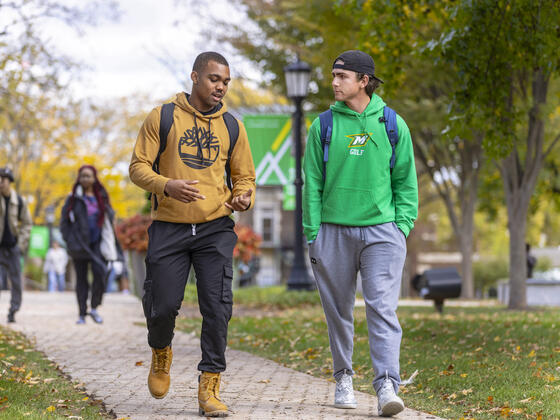
Two students chat and walk on the McDaniel campus.

Transfer Agreement with Carroll Community College

Students who complete appropriate coursework at CCC or other community colleges will receive full credit toward the major, up to 64 credits.

engineering student

Dual-Degree Program with Washington University (WashU)

McDaniel College partners with Washington University in St. Louis in one of the country’s premier 3-3 engineering programs. Students spend three years at McDaniel before moving on to WashU for an additional three years. They finish with three degrees: two bachelor’s and a master’s.

Faculty Spotlight Apollo Mian, Ph.D. Professor of Physics

Over the past 20 years, Professor Apollo Mian has helped countless students fill their knowledge gaps, allowing them to reach their full potential. His desire to help students who struggle is motivated by his own life’s experience where a compassionate seventh-grade teacher made all the difference in the world. Many of his students have gone on to complete graduate degrees in Physics and Engineering from prestigious universities and now have distinguished careers in the field.

Photo of alum Dimitri Lezcano sitting in a laboratory.

Alumni Spotlight Dimitri Lezcano ’19

Wanting to know how things work motives Dimitri Lezcano ’19 to investigate everyday technology, from circuit design to machine learning. As a Physics and Mathematics major on the Hill, he found that studying the full breadth of the liberal arts had prepared him for his master's and Ph.D. programs in robotics and Mechanical Engineering.

engineering