Skip to main
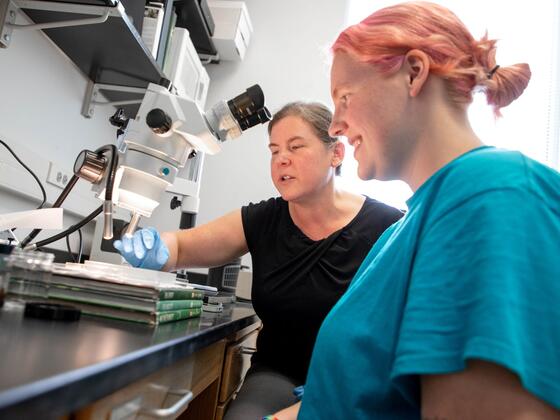
Students conducting experiment in research lab.

Biochemistry

In sci-fi movies, biochemists are the characters standing over samples of alien tissue announcing that they’ve never seen cells divide so fast—and that we’re all in a lot of trouble. While that’s a little far-fetched, Biochemistry actually does prepare you to study the chemical functions that make life—in all its forms—possible.

Mortarboard
Degree Types
Major
Institution
Complementary Programs
Heart
Distinctive Requirements
Capstone
Document
Graduate School Preparation
Pre-Med & PhD

Biochemistry is a field of study in which knowledge in chemistry is applied to living systems. The need to advance and evolve our knowledge in this field is crucial to humanity’s health and well-being.

The application of knowledge in Biochemistry has led to advances in areas which make our lives better, including:

  • Medicine – understanding the pathology of diseases would not be possible without the understanding of genetics and biomolecular pathways;
  • Pharmacy – the study of drug stability, metabolism, and action would not be possible without an evolving knowledge of biochemistry;
  • Nursing – many of the everyday blood tests administered by nurses are biochemical tests that provide valuable information on cholesterol levels, organ function, blood sugar concentrations etc.

Future Career Paths

McDaniel chemistry graduates go on to great graduate school programs and exciting careers at a wide variety of companies. Students have recently been employed at places like:

  • The University of Texas Health Science Center
  • Supernus Pharmaceuticals, Inc.
  • The Food and Drug Administration
  • Kimmell Cancer Center
  • Children’s Hospital of Pennsylvania
  • LabCorp

Recent graduates have also gained acceptance in Chemistry PhD programs at several of the top tier graduate schools including:

  • University of California, Davis
  • University of California, Santa Barbara
  • Northeastern University
  • University of Maryland

Distinctive Courses

BIO 1117 - Topics in Biology

This course is the second introductory course in the Biology major. In it students will continue to explore the principles of biology established in the first semester course, but within the narrower focus of a topic that varies by instructor. Besides mastering course content, students will also develop some of the skills of successful scientists, such as critically reading scientific literature, learning the basic conventions of writing in biology, or interpreting experimental data.

BIO 2208 - Molecular Biology

An introduction to the theory and methodology of molecular biology. The transition from DNA to RNA to protein will be explored along with a basic toolkit of laboratory techniques that are used in their analysis. There will also be an introduction to bioinformatics and genomics.

CHE 3307 - Physical Chemistry for Biology

This course introduces the fundamental theories of physical chemistry within the context of biological systems and highlights how physical chemistry can be used to gain insight into biochemical and biological systems. The topics discussed include thermodynamics and its application to energy flow in biological cells, kinetics of life processes, quantum mechanics and how it explains the structure of atoms, molecules, and macromolecules such as proteins, and finally biochemical spectroscopy that is used to reveal the molecular structure. The associated laboratory will utilize biological systems to explore the concepts covered in lecture.

CHE 4493 - Chemistry Seminar

Presentation of laboratory or literature findings on current topics of chemical interest by students, faculty, and visiting lecturers. This course is the Capstone Experience in Chemistry and is required of all senior Chemistry and Biochemistry majors and Exercise Chemistry dual majors.

Getting Ready for Graduate School Research Experiences Take the Next Step
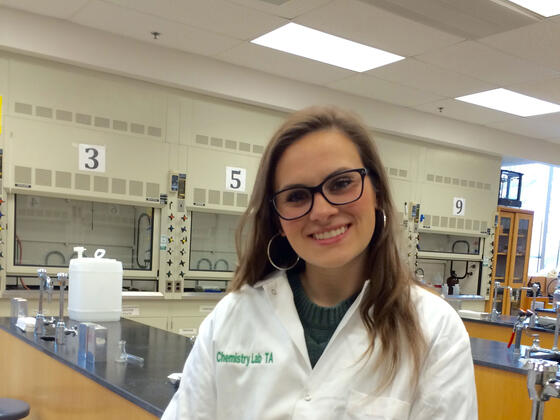
Caitlin McCadden in Lab.

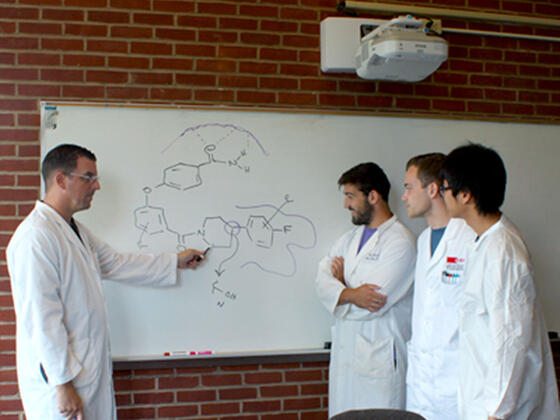
Curiosity sparks Chem student’s research from cancer drugs to medical cannabis

Organic chemistry changed Caitlin McCadden's career direction from orthodontics to medicinal chemistry research.
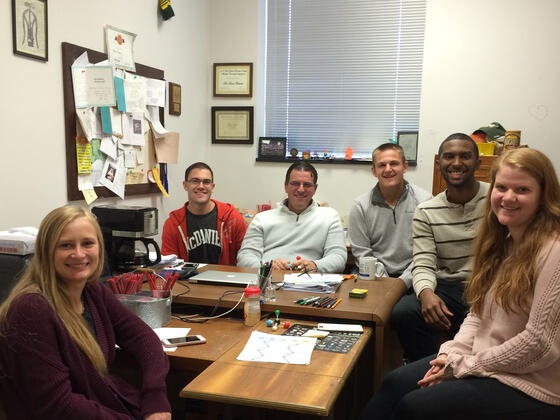
Summer Research Team

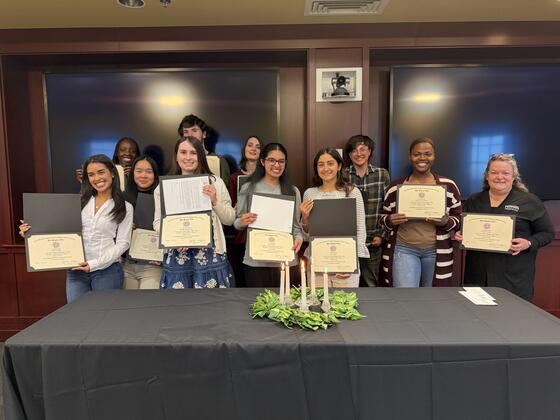
Summer research brings student team scientific recognition and lasting friendship

Last summer, when Chemistry professor Dana Ferraris welcomed his research team of a Chemistry-Kinesiology, two Biology and two Chemistry majors, he could not have predicted the awards and friendships that would come from the collaboration.
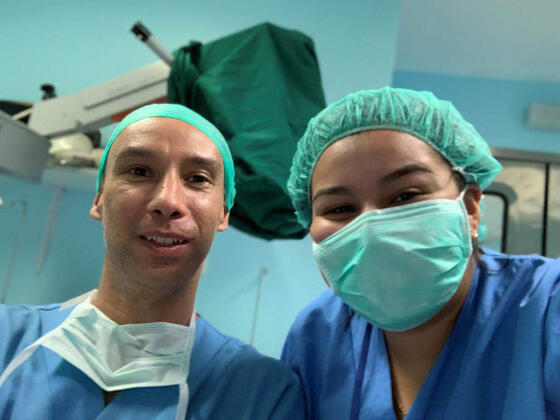
Elva Joya completes a medical internship.

Preparing for a pre-med program Medical, Dental & Veterinary School

If you are eyeing medical schools, dental schools or veterinary schools, McDaniel offers the mentoring and ideal environment to prepare you for success. Medical school is one of the most competitive career tracks available to you. It will be challenging, regardless of the undergraduate institution you choose. At McDaniel, expect not just a challenge, but our proactive support.

Biochemistry Program Requirements

The McDaniel Commitment in Action
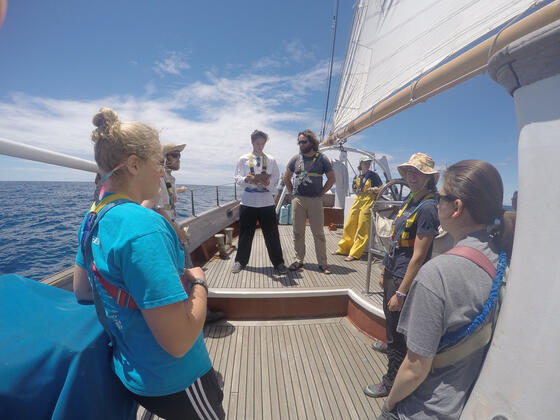
The McDaniel Commitment—a series of opportunities guaranteed to all students—provides enhanced mentoring and coaching, and ensures every undergraduate student completes at least two meaningful experiential learning opportunities.

A student wearing a hat leans on a railing looking off camera while smiling.

Meet a Green Terror Class of 2024: Dalton A. Pearl Anything is Possible

"I am leaving behind the impact of showing others it is possible. I want everyone to remember that you can succeed, whatever your goals are, no matter who doubts you. ’Cause no one would’ve thought the wrestling country boy would graduate with three STEM degrees and go on to pursue a doctorate."

Students walking towards Hoover Library

Alumni Spotlight Dr. Sandra Geiman Ruby Becoming a Doctor

Sandra Geiman Ruby almost didn’t become a neurologist or a physician of any kind. After she had her first child during the summer of her senior year, she seriously considered pivoting from her dream and explored nursing or pharmacy as slightly less rigorous grad school options. She shared the new plan with her biology professor and mentor Michael Brown, who listened sympathetically and assured her that he would support whatever decision she made. “But he told me, ‘You really need to go to medical school,’” she recalls. A bio-chemistry major and Phi Beta Kappan, she had been recognized with both the Gordon B. Shelton Award for Excellence in the Life Sciences and the Harry C. Jones Award for Chemistry at commencement. If anyone could ace medical school, it was Sandra.

News for Biochemistry